Monday, January 8, 2024

The Fall of the House of Usher


Edgar Allan Poe’s “The Fall of the House of Usher” stands as a foundational work in the Gothic genre, significantly influencing literary narrative and style. This story exemplifies Poe’s skill in blending atmosphere, emotion, and psychological depth, setting a precedent for future writers in the genre.


Poe’s mastery in creating a foreboding atmosphere has become a hallmark of the Gothic genre. The vivid descriptions of the Usher mansion – gloomy, decaying, and oppressive – set a standard for the setting as a character in itself.


Psychological Complexity: The psychological turmoil of Roderick Usher was groundbreaking. Poe delved into the human psyche, exploring themes of madness, fear, and the supernatural, paving the way for psychological horror.

The story is rich in symbolism, with the Usher house representing both the family’s lineage and its mental state. This use of allegory has influenced countless works, where environments reflect internal states.


Authors like H.P. Lovecraft, Stephen King, and Anne Rice  have drawn on his themes of psychological horror and atmospheric tension. “The Fall of the House of Usher” particularly influenced the development of American Gothic literature, introducing a unique blend of psychological realism and supernatural elements.


The story’s exploration of themes like hereditary illness, isolation, and paranoia prefigured modern horror’s preoccupation with the fragility and complexity of the human mind. Its structure, combining detailed first-person narrative with a looming sense of dread, has been emulated by countless authors, from Richard Matheson’s Hell House to Stephen King’s The Shining, and has become a defining feature of the genre.


In conclusion, “The Fall of the House of Usher” is not just a story of terror and decay but a seminal work that expanded the boundaries of Gothic literature. Its themes, narrative style, and atmospheric depth continue to influence writers and remain a critical study in understanding the evolution of horror and Gothic fiction.

Saturday, January 6, 2024

Hell House


Richard Matheson’s “Hell House” is a gripping and intense horror novel that masterfully blends supernatural elements with psychological depth. It stands as a significant work in the horror genre, notable for its intricate plot and profound exploration of themes like belief versus skepticism, the nature of evil, and the psychological underpinnings of fear.


The plot revolves around a group of four individuals – a physicist, his wife, a mental medium, and a physical medium – who are hired to investigate the infamous Belasco House, known as “Hell House” due to its dark history of debauchery and mysterious deaths. The novel’s plot is tightly woven and chronologically structured, escalating from a seemingly straightforward supernatural investigation into a psychological maelstrom. The narrative is paced to gradually reveal the horrific past of the Belasco House (Hell House) alongside the characters’ experiences within. This parallel development of past and present narratives serves to deepen the suspense and connect the house’s history directly to the unfolding events.


Character development is a strong suit in this novel. Each character is deeply fleshed out, with their own fears, motivations, and histories. The physicist Dr. Barrett, his wife Edith, the mental medium Florence, and the physical medium Fischer – is distinctly crafted with unique perspectives on the paranormal. Their backgrounds and beliefs not only clash but also evolve in response to the house’s malevolent influence, driving the plot forward. The characters’ development is crucial as it mirrors the reader’s journey from skepticism to belief, and in some cases, terror.


As the story progresses, the characters’ psychological vulnerabilities are expertly exposed and manipulated by the malevolent forces within the house, leading to intense and often terrifying confrontations. The dynamic between the characters, especially the conflicts and alliances that form as they face the house’s horrors, adds a compelling layer to the narrative.


Matheson’s “Hell House” is not just a tale of supernatural occurrences; it’s a study of belief, skepticism, and the human psyche under extreme pressure from evil as a palpable force. The novel keeps you guessing until the very end, making it a quintessential read for horror enthusiasts.


Sunday, December 31, 2023

The Turn of the Screw


The Turn of the Screw, Henry James’s 1898 novella, is a masterpiece of psychological and gothic horror that has captivated readers for over a century. Set in a remote English country house, the story unfolds through the eyes of a young, inexperienced governess who takes charge of two enigmatic children, Miles and Flora. What begins as a seemingly idyllic assignment soon spirals into a haunting tale of suspense and ambiguity.


James masterfully crafts an atmosphere thick with tension and uncertainty. The novella is renowned for its intricate narrative structure and the unreliability of its narrator, leaving readers teetering on the edge of the supernatural and the psychological. The true genius of the story lies in its subtlety; James never fully reveals whether the ghosts the governess believes she sees are real or figments of her imagination, a decision that fuels endless interpretation and discussion.


The eerie setting, combined with James’s skillful use of language, creates a sense of creeping dread that permeates every page. The characters are meticulously drawn, with the innocence of the children juxtaposed against the governess’s growing hysteria, adding layers of complexity to the narrative.


The Turn of the Screw stands as a seminal work in the ghost story genre, its influence echoing in literature and cinema alike. Its exploration of themes such as innocence, corruption, and the nature of evil makes it a timeless piece, as haunting today as it was over a century ago.


Thursday, December 7, 2023

The Haunting of Hill House


The Haunting of Hill House by Shirley Jackson is a seminal work in the genre of psychological horror and a masterpiece of Gothic storytelling. In this 1959 novel, Jackson weaves a tale of suspense and terror that has stood the test of time, influencing countless other works in the genre.


The story revolves around Hill House, a mansion with a notorious reputation for being haunted. Eleanor Vance, the protagonist, is a fragile, repressed young woman who joins a group of people participating in a paranormal study at the house. As the narrative unfolds, Jackson masterfully blurs the lines between reality and the supernatural. The true genius of Jackson’s writing lies in her ability to create a palpable atmosphere of dread and unease without relying on traditional ghost story tropes.


Jackson’s portrayal of the house as a living entity, influencing the thoughts and actions of its inhabitants, is reminiscent of Edgar Allan Poe’s The Fall of the House of Usher. Both stories use the house as a central character, a symbol of decay and the unknown. Furthermore, Jackson’s exploration of the psychological aspects of horror places her work alongside Charlotte Perkins Gilman’s The Yellow Wallpaper, which also delves into the psyche of a troubled protagonist, albeit in a more overtly feminist context.


The influence of The Haunting of Hill House extends to modern works as well. Stephen King’s The Shining owes much to Jackson’s narrative style and her ability to create a sense of isolation and psychological terror. Similarly, Mark Z. Danielewski’s House of Leaves also explores the theme of a house with its own malevolent personality, a direct nod to Jackson’s influence.


Overall, The Haunting of Hill House is not just a ghost story; it’s a complex exploration of the human psyche, of fear, and the unseen forces that shape our lives, making it an enduring legacy in the realm of psychological horror and gothic literature.


Monday, November 13, 2023

A.I. 2041: Ten Visions for Our Future


A.I. 2041: Ten Visions for Our Future, by Kai-Fu Lee and Chen Qiufan, offers a multi-faceted look into the potential futures shaped by artificial intelligence. Through a blend of storytelling and analysis, the authors, with their deep roots in AI development, present ten narratives that explore the implications of AI on various aspects of human life without overhyping its potential.


The book delves into topics such as AI’s influence on social structures, education, and economics. One story, The Golden Elephant, examines AI’s societal externalities, like deepening social biases, while Twin Sparrows explores personalized AI in education, suggesting profound changes in learning and human relationships with technology. 


Dreaming of Plentitude, contemplates a post-scarcity society, where despite technological abundance, societal challenges persist. In this final vision of A.I. 2041, Kai-Fu Lee envisions a post-scarcity society where technological advancements in AI, automation, and energy have created an abundance akin to the utopian worlds of science fiction. This concept of Plentitude, however, reveals complex social dynamics. The story, set in Australia, shows that despite the availability of resources, the challenge of maintaining motivation and purpose remains, as individuals struggle with motivation and substance abuse. Lee suggests that technological progress alone won’t solve human issues and that even in a world of plenty, societal values and structures will continue to play a crucial role.


Lee and Qiufan’s work serves not just as a forecast but as a prompt for discourse on the ethical and practical dimensions of AI’s evolution in our society.


Tuesday, October 17, 2023

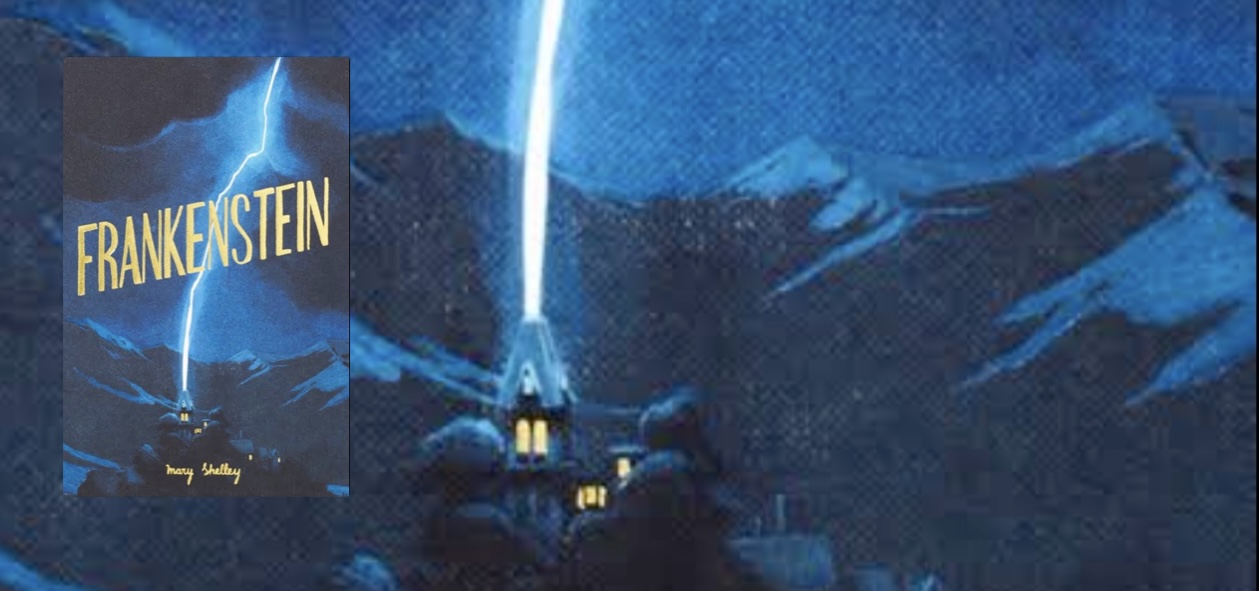
Frankenstein


Mary Shelley's Frankenstein is a timeless classic that delves into the depths of human ambition and the consequences of playing God. Written in the early 19th century, this novel continues to captivate readers with its haunting narrative and thought-provoking themes.


Set against a backdrop of icy desolation in the Arctic, the story is narrated through a series of letters and firsthand accounts. It begins with Captain Robert Walton's letters to his sister, detailing his expedition to the North Pole. Here, he encounters Victor Frankenstein, who shares his chilling tale.


Victor, a young and brilliant scientist, becomes consumed by a desire to unlock the secrets of life and death. Driven by unquenchable ambition, he embarks on a perilous journey that leads to the creation of a grotesque and intelligent being. This nameless creature, often mistakenly called Frankenstein, becomes the novel's central figure, provoking questions about identity, humanity, and morality.


Shelley's masterful storytelling delves into the dark recesses of the human psyche. The narrative weaves themes of scientific curiosity, moral responsibility, and the destructive power of unchecked ambition. Victor's reckless pursuit of knowledge and the creature's lonely existence evoke sympathy and horror simultaneously.


The novel's strength lies in its exploration of the blurred lines between creator and creation, good and evil, and the tragic consequences of abandoning one's own creation. Shelley's prose is eloquent and evocative, painting vivid landscapes and evoking a chilling atmosphere.


While some readers might find the language archaic, it adds to the story's Gothic charm and historical context. Shelley's exploration of ethical and philosophical dilemmas remains as relevant today as it was in the 19th century, prompting readers to ponder the consequences of scientific advancement and the responsibilities that come with it.


Frankenstein is more than a horror tale; it is a cautionary narrative that serves as a mirror to our own ambitions and ethical decisions. It challenges us to consider the ethical implications of scientific progress and the enduring question of what it means to be human. Mary Shelley's creation continues to stand as a monument to the enduring power of literature to provoke thought and stir the emotions.

Tuesday, September 5, 2023

The Many Eras of the Time Machine


H.G. Wells' "The Time Machine" is a riveting journey through the corridors of time that blends science fiction with profound social commentary. The narrative follows the adventures of the Time Traveler, an inquisitive inventor who constructs a machine that propels him to the distant future. Arriving in 802,701 AD, he encounters two distinct races: the Eloi, a gentle yet feeble species, and the sinister Morlocks, who dwell underground.

Wells' prose paints a vivid picture of a world transformed by millennia, where evolution and societal structures have taken divergent paths. Amidst the awe-inspiring landscapes and eerie encounters, the novel raises questions about the consequences of unchecked progress and the potential pitfalls of social hierarchy. The Time Traveler's exploration is not just of time but also of humanity's possible fates.

As a pioneering work of science fiction, "The Time Machine" transports readers across epochs, igniting contemplation about the course of human civilisation. Wells' narrative skill and his knack for weaving speculative fiction with philosophical ponderings cement this tale as a timeless classic that continues to enthral and provoke thought. Whether you're a seasoned science fiction enthusiast or a curious literary explorer, this book invites you to journey through time's boundless corridors and contemplate the intricate tapestry of human destiny.

Film Adaptations H.G. Wells' timeless classic: "The Time Machine" has inspired many film adaptations. Two notable additions include George Pal's 1960 movie and Simon Wells' 2002 take.

With its stunning time travel sequences and imaginative portrayal of the distant future, Pal's version remains a standout. The film adeptly captures the Time Traveler's journey through the ages and his encounter with the Eloi and Morlocks, blending adventure with social commentary.

Simon Wells, H.G. Wells' great-grandson, directed a modern take on the story. This version added a romantic subplot while retaining the core elements of the novel. Its visual effects showcased a futuristic world in remarkable detail, reimagining the Eloi and Morlocks in a new light.

These adaptations and the many varied TV and cinematic versions incorporating time travel elements have demonstrated the enduring appeal of "The Time Machine," reflecting the era written, offering a glimpse into society's evolving concerns and technological advancements, and their impact on an evolving society, and the consequences of humanity's choices and actions. 

Book Adaptations: Numerous written adaptations have sprung from Wells' groundbreaking work, each adding its creative twist to the time-travelling narrative. One notable adaptation is "Time and Again" by Jack Finney, published in 1970.

Finney's novel combines elements of science fiction and historical fiction, following the adventures of protagonist Simon Morley. Employed by a secret government project, Morley uses hypnosis to transport himself back to New York City in the 1880s. The meticulous attention to historical detail immerses readers in the past, capturing the era's essence.

While "Time and Again" is not a direct retelling of Wells' story, it draws inspiration from "The Time Machine" by exploring time travel differently. Finney's narrative focuses on the wonders and challenges of experiencing a bygone era, intertwining a sense of nostalgia with scientific curiosity. The adaptation offers a fresh perspective on time travel, delving into the romance of time's fluidity and its impact on personal experiences. 

Time travel has become a significant sub-category of the science-fiction/fantasy genre, with many award-winning novels incorporating these elements. A more recent example is Connie Willis' two-volume time travel sequence, Blackout and All Clear, a gripping portrait of London during the Blitz, which won science fiction's Hugo Awards in 2011

The future of time travel:  Contemporary science fiction writers are increasingly exploring the future impact of new technologies such as VR, AR and AI Singularity. In a time where society is digitally interconnected, where real and virtual worlds are seamlessly connected, the concept of time travel moves from pure fantasy to becoming a potential future. 

Young brilliant programmers are becoming the new groundbreakers where the power of the human mind could be surpassed by technology, creating strange new worlds where users can download their memories and relive moments from their past in virtual realities.

Novels such as William Gibson’s The Peripheral (2014) have considered the impact of powerful technologies, where humanity gains the ability to explore the past on a grand scale, opening the possibility of catastrophic outcomes. Experimental glitches could confuse a traveller's real memories with memories from other eras they never lived in, inadvertently creating virtual manifestations or echoes of historical events that exist in parallel timelines, uncovering connections between virtual reality technology and the concept of parallel universes, inadvertently splintering into different timelines, creating a bridge between these timelines. Alternate histories could decelop, subtlely altering the course of future events, but impactfully changing the present. 

In a world where the lines between past, present, and future are far more malleable, new challenges could emerge, leaving future generations to grapple with the unexpected and potentially dire ramifications.